Why Google Search Results Are Full of Ads in 2026
Patrick Bushe
February 22, 2026 · 5 min read
Google search in 2026 is barely recognizable compared to what it was a decade ago. If you feel like your search results are increasingly full of ads, sponsored content, and AI-generated answers that don't address your question, you're not wrong. The data backs it up.
What Changed
Google's ad revenue depends on users clicking ads. As more users became ad-blind, Google responded by making ads harder to distinguish from organic results. The "Ad" label shrank. The background color difference disappeared. Sponsored results adopted the same layout as organic results. The line between advertisement and genuine recommendation blurred by design.
Simultaneously, the number of ad slots increased. Searches with commercial intent now show four or more ads before the first organic result. Shopping carousels consume significant screen real estate. And features like "People Also Ask" and featured snippets, while not ads, further push organic results below the fold.
The Zero-Click Problem
A growing percentage of searches now result in zero clicks to any website. Google answers the query directly on the search results page through featured snippets and AI overviews, keeping users on Google instead of sending them to the actual source. This is great for Google's ad impressions and terrible for the websites that create the content Google is summarizing.
What You Can Do About It
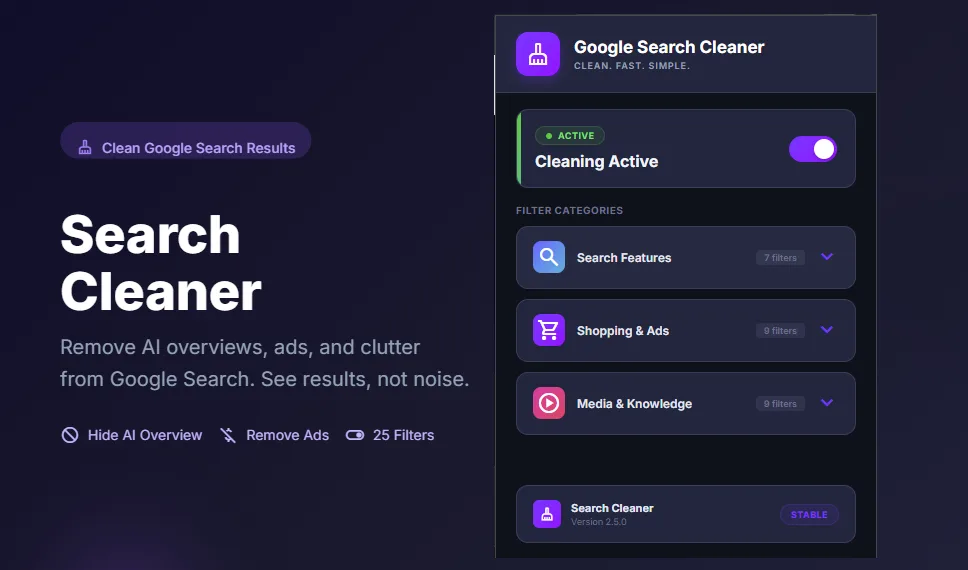
You can't change how Google structures its results page. But you can change what you see. Search Cleaner removes sponsored results, shopping carousels, and promoted content from Google search. It leaves you with only the organic results that websites earned through actual content quality.
Install Search Cleaner and run your most common searches again. You might be surprised to discover useful websites you've never seen because they were always buried below four screens of ads and promotions.
The information you need is still on the internet. It's just harder to find in a search engine that increasingly prioritizes revenue over relevance.