How to Set Up Auto Refresh for Live Sports Scores in Chrome
Patrick Bushe
January 2, 2026 · 5 min read
Some sports score sites update automatically via WebSocket or push technology
— you just have the tab open and scores pop in. ESPN's live game pages,
Google's score cards, and BBC Sport all do this.
But plenty of sites don't — local team tracker sites, niche sport aggregators,
college athletics pages, and regional sports sites often just render static
HTML that requires a manual refresh to show new scores.
If your go-to score page is one of those, here's the fastest way to keep
it updated without sitting there hitting F5.
First: check if the page auto-updates
Before setting anything up, open the score page and watch it for 2-3 minutes.
If a live game is in progress, do the scores change without you refreshing?
If yes — great, you don't need to do anything.
If the scores are frozen until you refresh, you're dealing with a static page
and need to add auto-refresh yourself.
Quick setup with AutoBrowser
This takes about 60 seconds:
1. Open the score page in Chrome
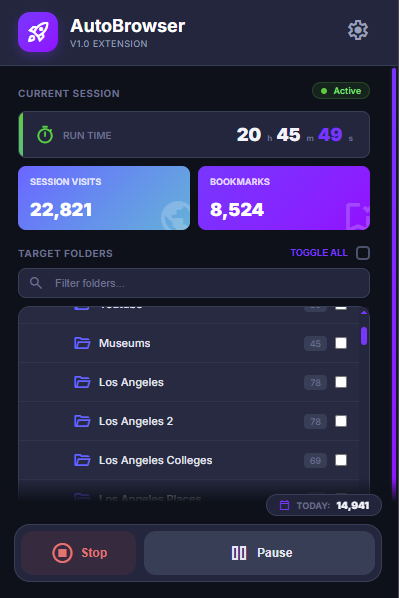
2. Click the AutoBrowser icon in your toolbar
3. Set the refresh interval. For live sports, 30-60 seconds is the sweet
spot — scores rarely change faster than once per minute and a slower
interval is kinder to the site's servers
4. Enable the refresh
The tab will now reload on your chosen schedule. AutoBrowser shows a small
countdown badge on the icon so you can see when the next refresh is due.
Keeping score tabs out of your way
For following a game while you're working, you probably don't want the score
tab as your active tab — you want to occasionally glance at it.
AutoBrowser's Background Only option means the tab only refreshes when it's
not the active tab. This prevents the annoying situation where you're reading
something on the score page and it suddenly reloads mid-sentence.
For a cleaner setup:
1. Open the score page in a separate Chrome window (right-click tab → Move
to New Window)
2. Position the window to the side of your main screen
3. Set AutoBrowser to refresh every 45 seconds
4. Enable Background Only mode
Now you have a score sidebar that updates constantly when you're not looking
at it, and pauses when you are.
Handling session requirements
Some sports sites (ones behind a subscription or login) will show a login
prompt after X minutes of inactivity, which can prevent the auto-refresh
from getting live data. If this happens, combine a longer refresh interval
(every 2-3 minutes) with AutoBrowser's keep-alive click, pointed at a
non-destructive element on the page to prevent the session from expiring.
For truly critical games, nothing beats a dedicated app. But for casual
following without a TV, an auto-refreshing browser tab is a perfectly
respectable solution.
Which score sites need auto-refresh and which don't
Here's a quick breakdown of the major sports sites and their live update
behavior as of 2026:
- Sites that auto-update (no extension needed):
- Google's inline score cards (search for a team or game)
- ESPN game pages (the in-game live view specifically)
- BBC Sport live text coverage
- FotMob and FlashScore (dedicated apps, but web versions also live-update)
- Sites that require manual refresh or auto-refresh setup:
- Most college athletics department sites
- Regional newspaper sports sections
- Niche league and minor sport trackers
- Older forum-based sports communities with score threads
To quickly test which category a site falls into, open DevTools Network
tab, filter by XHR/Fetch, and watch whether new requests fire automatically
every 30-60 seconds. If you see periodic requests without page refresh,
the site is using polling or WebSocket to update scores dynamically.
If the network tab is quiet until you manually refresh, you need AutoBrowser.
Combining with a second monitor
If you have a two-monitor setup, the cleanest sports-following arrangement
is to dedicate a portion of your secondary monitor to a small Chrome window
with the score page running AutoBrowser refresh. This keeps your primary
workspace completely uninterrupted while the score tab refreshes silently
in the background. Size the window to just show the score and nothing
else — hide navigation and sidebar elements using the browser's zoom
and window sizing.
Data usage on mobile hotspot
If you're following a game via mobile hotspot, a page refreshing every
30 seconds adds up. Most sports score pages are 200-500KB per load.
At 30 seconds, that's roughly 25-50MB per hour — not enormous, but worth
knowing if you're on a metered connection. Bump the interval to 2-3 minutes
if data is a concern.
Multiple games simultaneously
For days with multiple games running at the same time — playoff weekends,
double-headers, or multi-sport days — you can set up separate tabs for
each game's score page with individual AutoBrowser refresh rules. Each
tab gets its own interval and countdown timer. The extension icon badge
shows the combined status of all active rules, and clicking it shows
which tabs are actively refreshing. Keep the games in a separate Chrome
window from your main work so they're easy to switch to and from without
disrupting your primary workflow.