What Is Third-Party Tracking and How Does It Follow You Across Websites
Patrick Bushe
April 8, 2026 · 5 min read
Third-party tracking is a method where companies other than the website you are visiting collect data about your browsing behavior. When you visit a news site, for example, dozens of advertising networks, analytics providers, and data brokers simultaneously receive information about your visit — your location, device type, browsing history, and more. A 2025 study by Cookiebot found that the average website loads 21 third-party trackers on every page load.
What You Need to Know First
Online privacy has become one of the defining concerns of the modern internet. With over 4.9 billion people online daily, the scale of data collection is staggering — the average website now loads 15 to 20 third-party trackers, each gathering different slices of your browsing behavior. This data feeds into a multi-billion dollar surveillance advertising economy that most users never see.
The topic of third party tracking explained fits squarely into this landscape. Understanding how tracking technologies work is not just an academic exercise — it directly determines how much control you have over your own data. The good news is that once you know what to look for, there are effective and free tools that put you back in the driver's seat.
Chrome remains the most popular browser by a wide margin, which means most privacy tools are built for it first. The extensions recommended in this guide all use Manifest V3, Chrome's latest and most secure extension platform, and request only the minimum permissions needed to function.
How It Works: A Technical Overview
The technical mechanisms behind third party tracking explained are more layered than surface-level articles typically explain. Understanding these layers helps you make genuinely informed decisions rather than just following generic advice.
At the browser level, every time you visit a website, Chrome sends an HTTP request containing headers that reveal your browser version, operating system, screen resolution, language preferences, and more. The server responds with content and instructions — via cookies, response headers, and JavaScript — that can affect every subsequent interaction.
Modern web technologies have significantly expanded this basic exchange. JavaScript running in the browser can access APIs that reveal detailed device information: the Canvas API can generate a unique fingerprint based on how your GPU renders graphics. WebGL exposes your graphics hardware. The AudioContext API creates audio fingerprints. Even your battery status and installed fonts can be used to uniquely identify your browser.
The key insight is that how does third party tracking work involves multiple overlapping systems, each originally designed for a legitimate purpose — video calls, graphics rendering, font display — but repurposed for identification or tracking. No single tool addresses all of these vectors, which is why a layered approach using multiple specialized extensions is more effective than relying on any single solution.
From a practical standpoint, browser extensions address these layers differently. Some block scripts from executing. Others spoof or randomize the data your browser reports. Others control which information leaves your browser in the first place. The most effective strategy combines tools that target different layers of this stack.
Practical Tips and Best Practices
Start with the defaults and adjust one setting at a time. Changing too many things at once makes it impossible to identify which change caused an improvement — or a problem.
Use Chrome profiles to separate different use cases. A "work" profile with productivity extensions and a "personal" profile with privacy tools keeps configurations clean and prevents conflicts. Chrome Profiles are free and take 30 seconds to set up in chrome://settings.
Bookmark the key resource pages for third party tracking explained. As you learn more, you will find community discussions, developer changelogs, and tutorials worth revisiting. A dedicated bookmarks folder keeps them organized and accessible.
Monitor extension performance with Chrome's built-in Task Manager (Shift + Esc). This shows exactly how much memory and CPU each extension consumes. If something is using excessive resources, you will see it here immediately.
Keep your extensions updated. Chrome auto-updates extensions, but sometimes you need to manually trigger an update by going to chrome://extensions, enabling Developer Mode, and clicking "Update." This is especially important after major Chrome releases.
Consider Ghost Browser as a starting point for third party tracking explained. It is free, uses minimal permissions, and is built on Manifest V3 for maximum security and performance. It integrates well with other Chrome extensions without conflicts.
Recommended Chrome Extensions for Third-Party Tracking
Several free Chrome extensions are directly relevant to third party tracking explained. Here are the ones worth knowing about:
Ghost Browser
Ghost Browser is a Chrome extension that randomizes browser fingerprint data to make tracking unreliable. Built on Manifest V3, it uses minimal permissions and does not collect or transmit personal data. The extension is actively maintained with regular updates to keep pace with Chrome's monthly release cycle.
For third party tracking explained specifically, Ghost Browser is relevant because it addresses one of the key aspects of the problem directly within the browser — no configuration files to edit, no technical knowledge required. Install it from the Chrome Web Store and it starts working immediately.
WebRTC Privacy Shield
WebRTC Privacy Shield is a Chrome extension that prevents WebRTC IP leaks while keeping video calls working. Built on Manifest V3, it uses minimal permissions and does not collect or transmit personal data. The extension is actively maintained with regular updates to keep pace with Chrome's monthly release cycle.
For third party tracking explained specifically, WebRTC Privacy Shield is relevant because it addresses one of the key aspects of the problem directly within the browser — no configuration files to edit, no technical knowledge required. Install it from the Chrome Web Store and it starts working immediately.
Clipboard Guard
Clipboard Guard is a Chrome extension that blocks websites from reading or modifying your clipboard. Built on Manifest V3, it uses minimal permissions and does not collect or transmit personal data. The extension is actively maintained with regular updates to keep pace with Chrome's monthly release cycle.
For third party tracking explained specifically, Clipboard Guard is relevant because it addresses one of the key aspects of the problem directly within the browser — no configuration files to edit, no technical knowledge required. Install it from the Chrome Web Store and it starts working immediately.
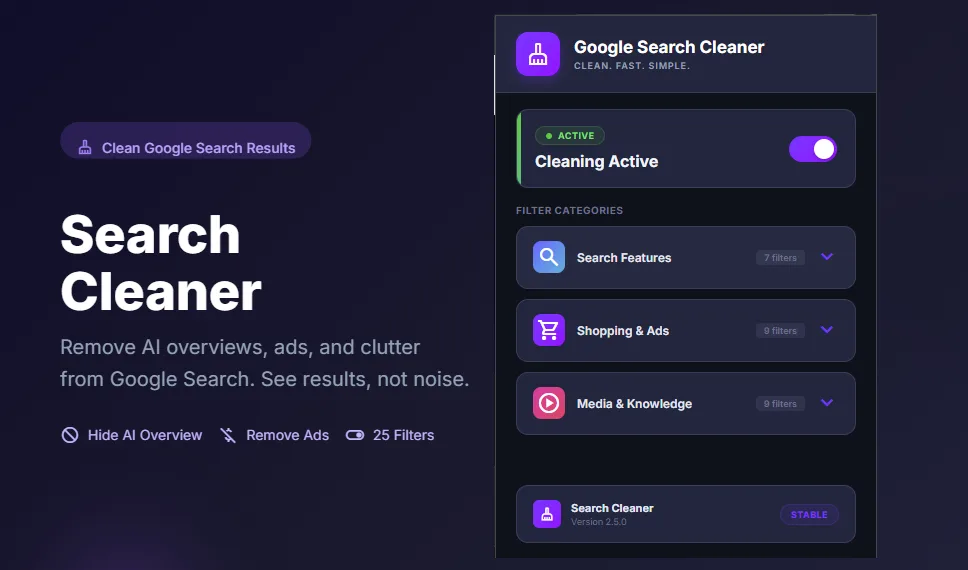
Other extensions worth considering in this space include: Cookie Auto-Reject (Chrome extension that automatically clicks reject/decline on cookie consent popups); Search Cleaner (Chrome extension that removes AI overviews, ads, and clutter from Google Search results).
A note on extension stacking: more is not always better. Each extension consumes memory and can potentially conflict with others. Start with the one or two extensions that address your most pressing need, test them for a few days, and only add more if you identify a genuine gap.
Common Mistakes to Avoid
Even experienced users make avoidable mistakes when it comes to third party tracking explained. Here are the most common ones:
Relying on a single tool to solve everything. No single extension or browser setting covers every aspect of third party tracking explained. The most effective approach combines two or three complementary tools, each addressing a different layer of the problem.
Skipping the documentation. Most Chrome extensions have help pages or FAQ sections that answer the most common questions in under two minutes. Reading them upfront saves hours of trial-and-error troubleshooting.
Installing too many extensions at once. Each extension adds memory overhead and potential conflicts. If your browser feels slow, open Chrome Task Manager (Shift + Esc) and check which extensions are consuming the most resources. Remove any you have not used in the past month.
Never updating or auditing. Chrome updates every four weeks, and each update can break extension compatibility. Check chrome://extensions monthly to verify everything is current and functioning. Remove extensions from developers who have stopped maintaining their software.
Assuming incognito mode is a complete solution. Incognito mode prevents Chrome from saving your local browsing history, but it does not hide your activity from websites, your ISP, or your employer's network. For genuine privacy, you need additional tools.
Not testing across different websites. An extension that works perfectly on one site may cause issues on another. After installing or configuring any tool, test it on a representative sample of the sites you use daily — including complex web apps like Gmail, Google Docs, and banking sites.
Frequently Asked Questions
Can third-party tracking follow me across different devices?
Yes. Cross-device tracking uses deterministic matching (same login across devices) and probabilistic matching (correlating IP addresses, browsing patterns, and device characteristics) to link your phone, laptop, and tablet activity into a single profile. Companies like Oracle and Lotame specialize in cross-device identity graphs.
Does incognito mode stop third-party tracking?
No. Incognito mode only prevents Chrome from saving your local browsing history. Third-party trackers embedded in websites still execute normally, your IP address is still visible, and browser fingerprinting works identically in incognito mode. For genuine tracking protection, you need dedicated browser extensions.
Are there free tools for third party tracking explained?
Yes. Every tool recommended in this guide is free. Ghost Browser is available at no cost in the Chrome Web Store and does not require a subscription or account. Paid alternatives exist, but for most users the free tools provide everything needed.
Related Reading
- First-Party vs Third-Party Cookies in 2026: What Actually Changed
- Dark Reader vs Modern Dark Mode: Honest Comparison for 2026
- DNS Leak Test: How to Check if Your Browsing History Is Exposed
- How Cookie Consent Requirements Differ for US vs EU Visitors