DuckDuckGo vs Kagi vs Brave Search: Alternative Search Engine Comparison
Patrick Bushe
June 23, 2025 · 5 min read
Kagi, DuckDuckGo, and Brave Search are the three alternatives to Google people compare most. All three skip the tracking Google is known for, but they pay for search in different ways, and that shapes everything else. DuckDuckGo and Brave are free and show ads. Kagi charges a subscription and shows none. Prices and features below were checked in September 2026.
The short answer
- DuckDuckGo if you want free, private search that feels familiar. It suits most people.
- Brave Search if you want free search from an index that isn't Bing or Google, with tools to re-rank results.
- Kagi if you search all day and will pay for results with no ads that you can tune site by site.
Kagi vs DuckDuckGo vs Brave at a glance
| Kagi | DuckDuckGo | Brave Search | |
|---|---|---|---|
| Price | $5, $10, or $25 a month; 100-search free trial | Free | Free; Premium $3 a month or $29.99 a year |
| Ads | None | Yes, from Microsoft, not tied to you | Yes, privacy-first; none with Premium |
| Where results come from | Its own web and news indexes plus anonymized calls to major search providers | Largely Bing, plus its own crawler and specialist sources | Its own independent index |
| Tune your results | Block, lower, raise, or pin any site; Lenses | Settings and !bangs | Goggles (custom re-ranking rules) |
| AI answers | Kagi Assistant, included in paid plans | Optional AI answers and Duck.ai chat, free | Answer with AI, free |
Price
DuckDuckGo and Brave Search cost nothing. Brave also sells Search Premium for $3 a month or $29.99 a year, which removes ads; Brave says Premium is available only in the Brave browser.
Kagi is the one you pay for. The trial gives you 100 searches. Starter is $5 a month for 300 searches, Professional is $10 a month for unlimited searches, and Ultimate is $25 a month for unlimited searches plus Kagi's premium AI models. If you run more than 10 searches a day, Starter won't last the month, so Professional is the real price for most people who switch.
Ads
Kagi has no ads at all. Members' subscriptions pay for the searches, so there is nothing to sell.
DuckDuckGo shows ads delivered through Microsoft. DuckDuckGo says your searches can't be tied back to you, and that Microsoft doesn't link your ad clicks to a user profile. You still see ads, but they aren't following you around the web.
Brave Search also shows ads, which Brave describes as privacy-first. Premium removes them.
Where the results come from
This is the biggest practical difference, because it decides how the results feel.
- DuckDuckGo gets its regular links and images largely from Bing, and adds its own crawler (DuckDuckBot) and sources such as Wikipedia for instant answers. If you like Bing's results, DuckDuckGo gives you roughly those without the tracking.
- Brave Search runs its own index, built from scratch. It is one of the few English-language engines that doesn't rent its results from Google or Bing, so you'll sometimes get different pages than elsewhere.
- Kagi blends its own web index (Teclis) and news index (TinyGem) with anonymized calls to the major search providers, smaller engines like Marginalia, and sources like Wikipedia and Wolfram Alpha. It queries about a dozen sources for each search and merges them.
Tuning your results
Kagi goes furthest here. A shield icon next to each result lets you block a site, lower it, raise it, or pin it to the top, and those choices apply to every future search. Blocking a few content farms makes a noticeable difference in recipe, product, and coding searches. Lenses narrow a search to a set of sites, like forums or academic sources.
Brave's version is Goggles: rule sets that filter or re-order results, which you can write yourself or pick from ones others have shared.
DuckDuckGo has less control over ranking, but it has !bangs: thousands of shortcuts that send your search straight to another site. !w searches Wikipedia, !a searches Amazon, and !g sends the search to Google when you need it.
AI answers
All three now offer AI, and all three let you ignore it.
- DuckDuckGo has optional AI-assisted answers in search and Duck.ai, a free chat that passes your questions to third-party models anonymously. You can hide both.
- Brave Search has Answer with AI, a summary with sources at the top of the results. It's free.
- Kagi includes Kagi Assistant in every paid plan. Ultimate adds research mode and flagship models from several AI companies.
Privacy
All three are a big step up from Google, and none of them builds an advertising profile of you. The difference is in how they earn money. Kagi's customers are its users, so it has no reason to collect anything about you. DuckDuckGo and Brave earn from ads, but deliver them without tying searches to you. For most people, any of the three is private enough. The bigger question is whether you want to pay.
How to switch in Chrome
- Open Chrome's Settings, then Search engine, then Manage search engines and site search.
- If your engine isn't listed, add it under Site search with one of these URLs:
https://duckduckgo.com/?q=%s,https://search.brave.com/search?q=%s, orhttps://kagi.com/search?q=%s. - Choose Make default from the three-dot menu next to it.
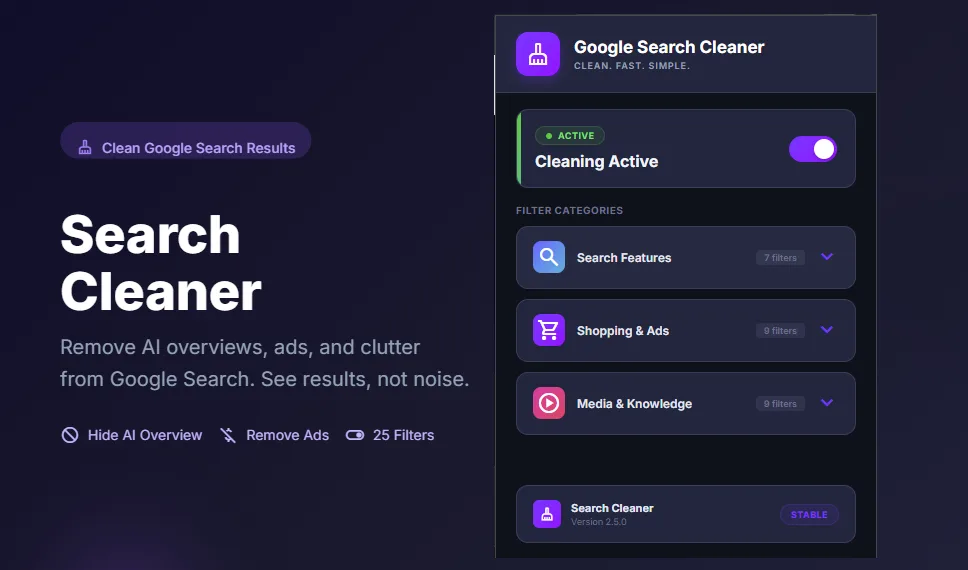
Staying on Google for now? Search Cleaner removes AI Overviews, AI Mode prompts, and sponsored results, so you get plain links back.
Frequently asked questions
Is Kagi worth paying for?
If search is a big part of your work day, usually yes. You get no ads and results you can shape by blocking and pinning sites. If you search casually, DuckDuckGo or Brave will do the job for free.
Is DuckDuckGo just Bing?
Mostly, for regular links and images. DuckDuckGo says it largely sources those from Bing, and adds its own crawler and specialist sources for instant answers. What you gain over Bing itself is the privacy.
Does Brave Search use Google results?
No. Brave says its results come from its own independent index, built from scratch.
Can I try Kagi for free?
Yes. The trial includes 100 searches, enough for a few days of normal use to see whether the results are worth $5 to $10 a month to you.
Which is the most private?
Kagi, narrowly, because it has no ads to fund. DuckDuckGo and Brave both show ads without building a profile of you, so all three are far more private than Google.