How Knowledge Panels in Google Scrape Content Without Credit
Patrick Bushe
June 24, 2025 · 5 min read
Knowledge panels are the information boxes beside or above Google results for people, places, companies and things. They pull facts from many sources, and only some of those sources are credited. That's frustrated publishers, and it's also why people ask how to get the same data themselves.
Where the information comes from
- Google's Knowledge Graph, a database of facts about entities and how they connect.
- Wikipedia, often the source of the short description, usually with a link.
- Wikidata, the open database behind many facts such as birth dates and founders.
- Official sites and licensed data, for things like sports scores, stock prices or film details.
- Google Business Profiles, for local businesses: hours, phone numbers, photos and reviews.
- Verified owners, who can claim a panel and suggest changes.
The credit problem
The description usually links its source. Many individual facts don't. When the answer appears on Google, fewer people click through to the site that did the work, which publishers see as using their content without fair return. AI Overviews raised the same concern on a larger scale. See the economics of AI search for publishers.
Claim or correct a knowledge panel
- Claim it: if the panel is about you or your organization, look for "Claim this knowledge panel" at the bottom and verify through an official site or profile.
- Suggest edits: once verified, you can suggest changes. Anyone can use "Feedback" to report errors.
- Fix the sources: correct your official website, Wikipedia (following its rules on conflicts of interest) and Wikidata, since panels draw from them.
- Local businesses: manage your Google Business Profile directly.
Getting knowledge panel data
Scraping Google's results pages breaks Google's terms of service, and it's fragile because the page changes often. Legitimate options:
- Google's Knowledge Graph Search API returns basic entity information, such as names, types and descriptions.
- Wikidata is free and open, with a public query service, and covers many of the same facts.
- The Google Places API provides business details such as addresses, hours and ratings, under Google's paid terms.
For sales leads, use the business data under those terms, and follow privacy and anti-spam rules when you contact anyone.
A cleaner results page
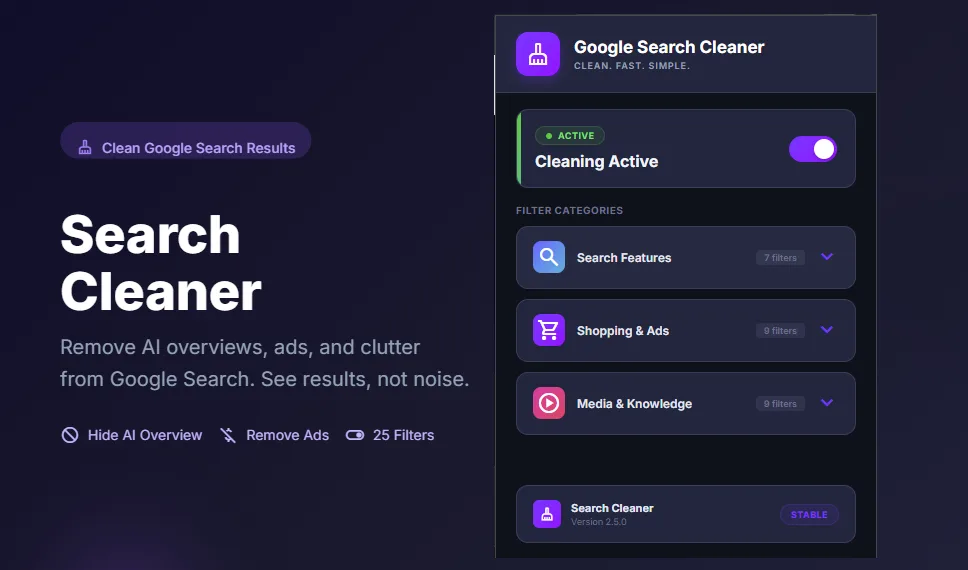
If the extra boxes on Google get in the way, Search Cleaner hides the sections you choose, including AI Overviews, People Also Ask, shopping carousels and the knowledge panel on the right. Hiding it changes only what you see; Google still shows it to everyone else. See why Google looks different now.