How to Use Google for Academic Research Effectively
Patrick Bushe
June 15, 2025 · 5 min read
Google is a good starting point for research if you use the right tools. Google Scholar searches academic papers, and a few search operators turn regular Google into a sharper research tool.
Google Scholar basics
Go to scholar.google.com. It searches journal articles, theses, books and conference papers.
- Cited by: shows newer papers that cite a result, a fast way to follow a topic forward.
- Related articles: finds similar work.
- All versions: often includes a free PDF from the author's site or a repository.
- Cite: gives the citation in common styles, with export to BibTeX and reference managers.
- Library links: in Scholar's settings, add your university library to get full-text links through your subscription.
- Alerts: get emails when new papers match a search or cite a key paper.
Search operators for regular Google
"exact phrase"for a specific term or quote.site:eduorsite:govto limit results to universities or government sites.filetype:pdfto find reports and papers.-wordto exclude a term.before:2020orafter:2022, or Tools → Any time, to limit by date.
Finding free, legal full texts
- Check Scholar's "All versions" and the author's own website.
- Unpaywall, a free extension, shows a link when a legal open-access copy of a paper exists.
- Your library can get most papers through interlibrary loan, and authors usually send a copy if you email them.
Cutting the clutter
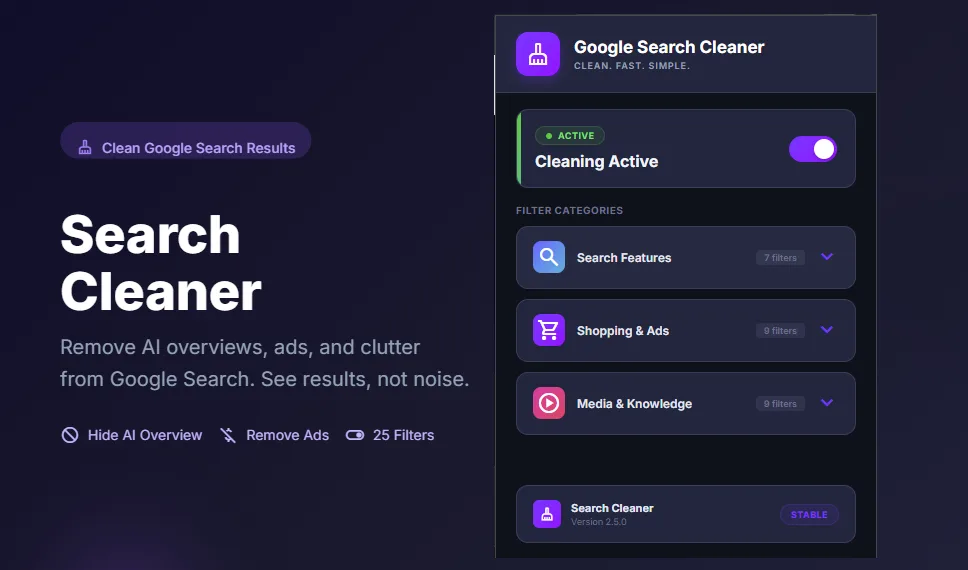
Regular Google results now often start with AI summaries, which can misstate research findings. Use the Web filter for plain results, or Search Cleaner to hide AI Overviews and other extra sections. See how to search without AI answers.
Judging what you find
- Peer review: journal articles are usually reviewed; preprints aren't yet.
- Date: check whether newer work has replaced it, using "Cited by".
- Source: prefer the original study over news coverage of it.
- Citation count shows influence, not correctness. Newer papers naturally have fewer.
Keep your sources organized
Save papers to a reference manager such as Zotero, which is free and has a Chrome extension that saves a paper and its citation in one click. Keep a note of the exact search terms that worked, so you can rerun them later or describe your method. For more tools, see extensions for researchers and academics, and for long papers, how to read academic papers with ADHD.