What Are Zero-Click Searches and Why They Matter for the Open Web
Patrick Bushe
June 16, 2025 · 5 min read
A zero-click search is one that ends without a click to any website. You get the answer on the results page, from a snippet, a box or an AI summary, or you give up and search again. They're convenient for you, and a growing problem for the sites that provide the information.
How common they are
A 2024 study by SparkToro, using clickstream data from Datos, estimated that 58.5% of Google searches in the US ended without a click to the open web. In 2025, the Pew Research Center found that when Google showed an AI summary, people clicked a regular result in about 8% of visits, compared with about 15% when there was no summary.
What causes them
- Direct answers: weather, sports scores, calculations, conversions, definitions and opening hours.
- Featured snippets and knowledge panels, which show the key fact from a page.
- AI Overviews and AI Mode, which summarize several sources in one answer.
- Google's own services: maps, flights, shopping and reviews that keep you on Google.
Why it matters for the open web
- Websites pay to create information, through writing, research and testing, and earn it back through visits, ads and customers.
- If the answer is shown without a visit, the site bears the cost and gets little in return.
- Over time, fewer sites can afford to create original work, and the answers have less to draw on.
Google says the clicks it does send are higher-quality visits. Publishers and regulators continue to push back. See the economics of AI search for publishers.
When zero-click is fine
For a quick fact, such as the time in Tokyo or a unit conversion, an instant answer is genuinely better. The concern is mainly with answers built from someone else's detailed work, such as reviews, guides and research.
What you can do
- Click through to sources when an answer matters, both to check it and to support the site.
- Subscribe to or bookmark sites you rely on, so you visit them directly.
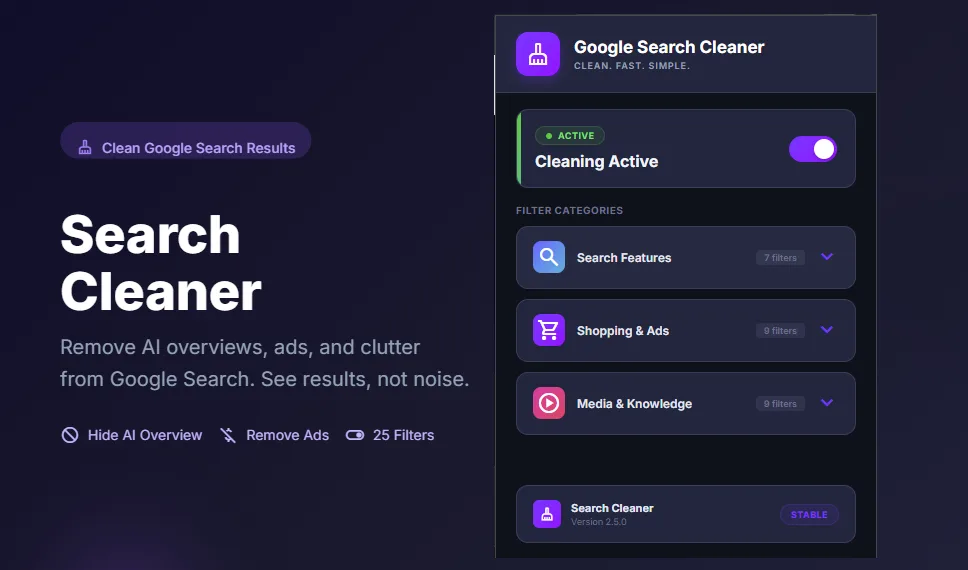
- Use plain results when you want sources rather than summaries: Google's Web filter, or Search Cleaner to hide AI Overviews, People Also Ask and other boxes.
For site owners
Focus on what a summary can't replace: original data, tools, firsthand experience and a reason to visit. Build direct channels, such as email, that don't depend on search. See how AI Overviews changed search.