How AI Assistants Use Browser Extensions Today
PB
Patrick Bushe
June 28, 2024 · 5 min read
AI assistants have moved from separate chat websites into the browser itself. Some are built into the browser, some arrive as extensions, and the newest can click and type on your behalf. Here's what they do today and what to watch for.
Built-in assistants
- Gemini in Chrome: Google's assistant, rolled out to desktop users in the US from September 2025, can answer questions about the page you're on. See how Gemini changes Chrome.
- Copilot in Edge: Microsoft's assistant in Edge's sidebar.
- AI browsers: several companies have launched browsers built around an assistant.
What AI extensions do
- Summarize articles, videos and long email threads.
- Write and rewrite in any text box: emails, posts, replies.
- Translate pages or selected text.
- Take meeting notes from video calls in the browser.
- Act for you: agent extensions, such as Anthropic's Claude in Chrome, can navigate sites, fill forms and click buttons when you ask.
How they work
Most AI extensions read the page you're on, send the text to an AI service and show the result in a sidebar or pop-up. To read pages, they need broad permissions, often "Read and change all your data on all websites". See extension permissions explained.
The risks
- Privacy: page content, including email and documents, may be sent to the AI company's servers.
- Prompt injection: a web page can contain hidden instructions aimed at the AI, such as telling it to visit another site or reveal information. Agents that can click and type are most at risk.
- Mistakes: summaries can miss or invent points, and agents can click the wrong thing.
- Fake AI extensions: malicious extensions pose as popular AI tools to steal data.
Using them safely
- Install AI extensions only from known developers, and check reviews and permissions.
- Turn on site restrictions where offered, such as only running when you click the icon.
- Don't let agents handle payments, passwords or sensitive accounts without watching.
- Review what an agent did before you confirm anything important.
- Check each tool's data and training settings. See using AI tools privately.
If you'd rather have less AI
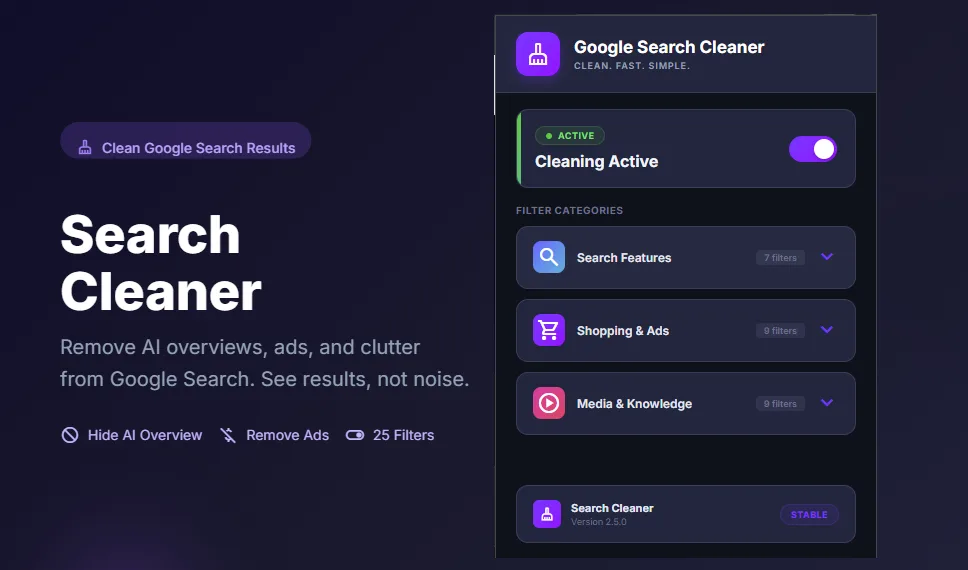
Search Cleaner isn't an AI tool. It hides Google sections you choose, including AI Overviews and the AI Mode tab, for people who prefer a page of plain links. See how ChatGPT browses the web.