How to Monitor Your Competitors Website for Changes Daily
Patrick Bushe
July 24, 2025 · 5 min read
Competitors change prices, launch products, rewrite their messaging and hire for new teams, and their websites usually show it first. A light, regular check keeps you informed without spending your morning on it.
Pages worth watching
- Pricing pages: new plans, price changes, free trials.
- Homepage and main landing pages: changes in headline and messaging show a shift in strategy.
- Product and feature pages: launches and retired features.
- Careers page: new roles hint at where they're investing.
- Blog and news: announcements, partnerships, content focus.
- Terms and policies: changes can signal new markets or business models.
Get alerts automatically
- Page change monitors: Visualping and Distill.io watch a page, or part of one, and email you when it changes. Free plans cover a handful of pages.
- RSS: many blogs and news pages have feeds you can follow in a reader.
- Google Alerts: for the company's name and products.
- Newsletters: sign up to their emails to see offers as customers do.
- Sitemaps: a site's
/sitemap.xmllists its pages; new entries reveal new pages.
A quick daily check
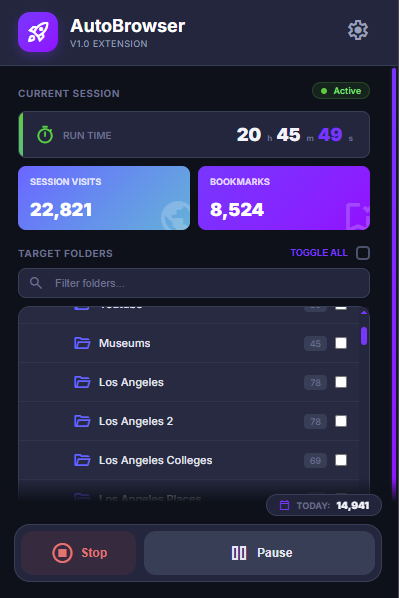
For a fast visual scan, put the pages you watch in one bookmark folder. AutoBrowser opens them one after another in a single tab, staying on each for the time you set, so you can look through ten competitor pages in a couple of minutes. It doesn't detect changes for you, so pair it with a change monitor for the pages that matter most.
Look back in time
The Wayback Machine shows how a page looked months or years ago, useful for spotting when a price or message changed. See researching a company's history through its website.
Keep a log
Note each change, its date and what you think it means in a shared document or spreadsheet. Patterns over months, such as steady price rises or a new target market, matter more than any single change.
Stay fair
- Watch public pages only; never use fake accounts or try to reach private areas.
- Don't run automated scrapers that hit a site constantly. A few checks a day is plenty.
- Respect the site's terms of use.
- Learn from their choices; don't copy their text or designs.
See also monitoring prices across sites and researching a competitor's Shopify apps.