How to Set Up a Digital Signage Display Using Just a Browser
Patrick Bushe
July 26, 2025 · 5 min read
A screen in a shop window, waiting room or office can show menus, schedules, dashboards or slides from a web browser. You don't need special signage software for simple setups: a computer, a screen and a few settings are enough.
What you need
- A screen: any TV or monitor with HDMI.
- A small computer: an old laptop, a mini PC or a Raspberry Pi. It only needs to run a browser.
- Content as web pages: your own pages, a dashboard, or slides published to the web.
1. Make the content
- Google Slides: File → Share → Publish to web, choose auto-advance timing and tick "Restart the slideshow after the last slide". You get a link that plays on a loop.
- Web pages: a menu page, an events calendar or a live dashboard.
- Use big text and high contrast; signs are read from a distance.
2. Show it full screen with kiosk mode
Chrome's kiosk mode opens a page full screen with no address bar or tabs. On Windows, create a shortcut whose target is Chrome followed by --kiosk and the address, for example chrome.exe --kiosk https://example.com/menu. On a Raspberry Pi, Chromium accepts the same option. Press Alt + F4 to exit.
3. Rotate between several pages
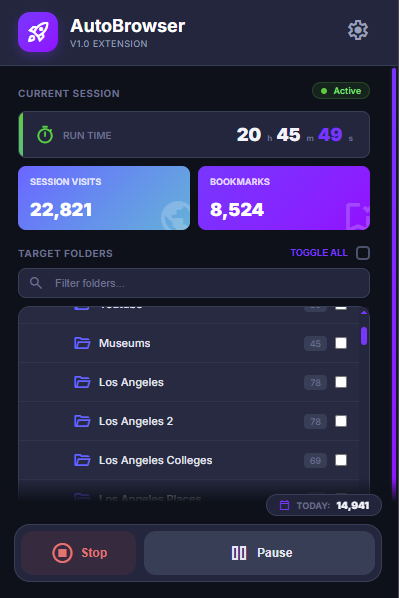
To cycle through a menu, today's specials and a promotion, AutoBrowser plays the pages in a bookmark folder in one tab, staying on each for the time you set (1 second to 5 minutes), and loops. Put each page you want to show in one folder and choose that folder.
4. Keep it running
- Stop sleep: set the screen and computer to never sleep, and turn off the screen saver.
- Start automatically: on Windows, put the kiosk shortcut in the Startup folder (
Win+R, typeshell:startup). Set up automatic sign-in for a dedicated account. - Power cuts: in the computer's BIOS settings, set it to turn on when power returns.
- Updates: schedule system updates for when the business is closed.
5. Refresh content that doesn't update itself
Live dashboards update on their own. Static pages may need reloading so changes appear; rotating them with a timer reloads each page as it comes round.
Keep it secure
- Use a separate account with no personal email or passwords signed in.
- Hide or lock the keyboard and mouse if the screen is in a public place.
- Don't display pages that show private customer information.
When to use real signage software
For many screens in different places, scheduling by time of day or remote management, a signage service or managed devices is worth paying for. Managed Chromebooks and Chromeboxes can run in a locked kiosk mode set up centrally. For a single screen or two, a browser is often all you need. See also building a monitoring dashboard.