How to Build a News Monitoring Dashboard With Auto-Refresh
Patrick Bushe
July 2, 2025 · 5 min read
A news monitoring dashboard keeps several sources in view at once: live blogs, wire services, social feeds and alerts. Newsrooms, PR teams, traders and researchers use them to catch stories early. You can build a good one with a browser and free tools.
1. Choose your sources
- Live pages: live blogs, breaking news sections, official feeds from agencies and companies.
- Feeds: RSS from the sites you follow most.
- Social: lists or custom feeds of reporters and official accounts.
- Alerts: Google Alerts for names, companies and topics you track.
Fewer, reliable sources beat many noisy ones.
2. Lay out the screen
- Side-by-side windows: on Windows, drag windows to screen edges or press
Win+Zfor snap layouts. On a Mac, hover over the green window button to tile windows. - A second monitor dedicated to the dashboard.
- Zoom out (
Ctrl+-) to fit more on each page.
3. Keep pages fresh
- Many live blogs and feeds update on their own.
- For pages that don't, an auto-refresh extension reloads them at a set interval. See auto-refresh extensions compared.
- Refresh every few minutes, not every few seconds; it's kinder to sites and rarely misses anything.
4. Rotate when space runs out
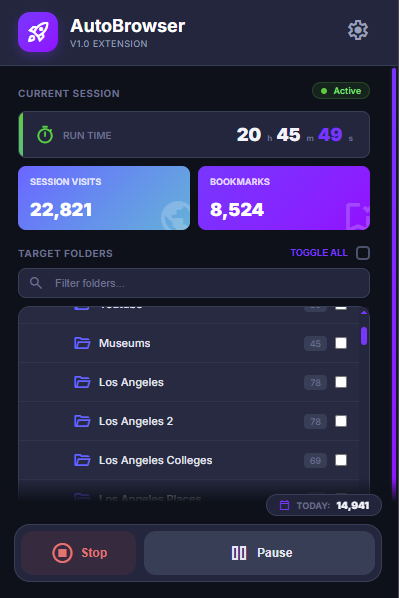
If you have more sources than screen space, put them in one bookmark folder. AutoBrowser plays them one after another in a single tab, staying on each for the time you set, from 1 second to 5 minutes, and loops. Use one window for a rotation and others for sources that must always be visible. See cycling through news feeds.
5. Stop tabs going to sleep
Chrome's Memory Saver can unload tabs you haven't looked at, which stops them updating. Add your dashboard sites under Settings → Performance → "Always keep these sites active".
6. Use a feed reader for completeness
A screen only shows what's on it at the moment you look. Feed readers such as Feedly and Inoreader collect every new article from your sources, so nothing slips past between refreshes.
7. Log what matters
Keep a running document of important items with the time you saw them and the source link. When a story develops, that timeline is valuable. Save key pages to the Wayback Machine in case they change. See archiving a page before it's taken down.
For a shared screen
For a wall display, see building an office dashboard display and dealing with cookie banners on rotating screens.