How to Build a Dashboard Rotation Display for Your Office TV
Patrick Bushe
July 31, 2025 · 5 min read
A TV on the office wall cycling through sales numbers, support queues, server status or project boards keeps everyone up to date without opening anything. Here's how to set one up so it keeps working without daily attention.
1. Choose the hardware
- Mini PC or old laptop: runs a full browser, so any dashboard works. The most reliable option.
- Raspberry Pi: cheap and small, fine for light dashboards; heavy ones can be slow.
- Casting a browser tab: works for short periods, but tends to drop over a full day.
- The TV's own browser: often too limited for modern dashboards.
2. Prepare the dashboards
- Design for distance: large numbers, few charts per screen, high contrast.
- Use your tools' TV or full-screen modes where they exist. Grafana, for example, has playlists that rotate dashboards on their own.
- Use a read-only account made for the display, never someone's personal login.
3. Keep logins alive
Dashboards that log out are the most common reason screens go blank. Check each tool's session settings, use "remember me", and keep the display in one dedicated browser profile that never clears cookies. Some tools offer public or embedded links for display use, which avoids logins entirely.
4. Rotate the pages
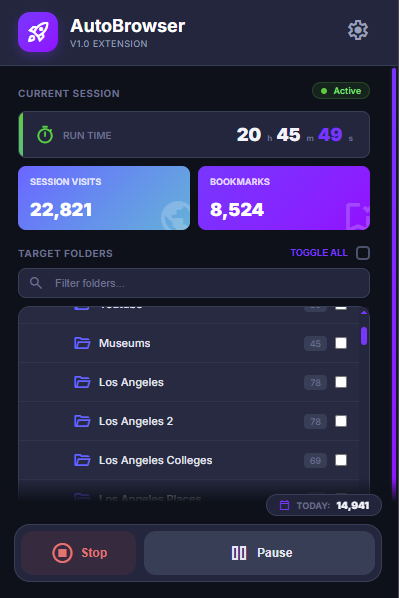
If your dashboards are in different tools, put each one's link in a bookmark folder. AutoBrowser opens them one after another in a single tab, from 1 second to 5 minutes each, and loops. Around 30 to 60 seconds per dashboard gives people time to read.
5. Set up the computer and TV
- Run Chrome in kiosk mode so there's no address bar. See setting up a browser display.
- Set the computer never to sleep, and to start the browser on boot.
- Turn off the TV's eco or auto-standby settings, which switch it off when no remote button is pressed.
- Use a smart plug or the TV's timer to switch it off at night and on in the morning.
6. Handle pop-ups
Cookie banners and update prompts can cover a dashboard. See handling cookie banners on rotating displays.
What not to show
- Customer names, emails or other personal data visible from a corridor.
- Salary or HR information.
- Anything you wouldn't want a visitor or delivery driver to photograph.
Keep it useful
Ask the team every few months which screens they actually look at, and drop the rest. Fewer, clearer dashboards beat a long rotation nobody reads.