How Voice Search Differs From Text Search for AI Systems
Patrick Bushe
June 26, 2024 · 5 min read
When you type a search, you see a page of options. When you ask a voice assistant, you usually hear one answer. That single difference shapes how voice queries are written, how AI systems answer them, and which sources benefit.
How people phrase spoken searches
- Longer and conversational: "what time does the hardware store on Main Street close" rather than "hardware store hours".
- Questions: who, what, where, how.
- Local: many voice searches are about nearby places and opening hours.
- Follow-ups: "and on Sunday?" relies on the assistant remembering the last question.
How AI assistants answer them
- Speech to text: the assistant transcribes what you said. Names, accents and background noise cause errors here.
- Understanding: it works out what you mean, using context from earlier in the conversation.
- Finding an answer: it searches the web, a business listing, or its own knowledge.
- Speaking one answer: it reads a short response aloud, sometimes naming the source.
Newer AI voice modes, such as those in ChatGPT and Gemini, hold a whole conversation instead of answering one question at a time.
What that means for accuracy
- You hear one answer with no other results to compare it against.
- The source is often not mentioned, so you can't judge it.
- A misheard word can change the whole answer.
Voice is great for quick facts, timers and directions. For anything you'll act on, such as medical, money or legal questions, check the answer on screen. See how AI answers go wrong.
For site owners: being the spoken answer
- Answer questions directly in a sentence or two under a heading that matches the question. See writing for featured snippets and AI.
- Write conversationally, the way people ask.
- Keep business details current in your Google Business Profile and other listings, since local voice answers come from them.
- Use FAQ sections for the questions customers really ask.
- Make pages fast and mobile-friendly, since many voice searches happen on phones.
Fewer clicks
A spoken answer rarely sends anyone to a website, which makes voice search an extreme kind of zero-click search. See zero-click searches.
Voice for browsing
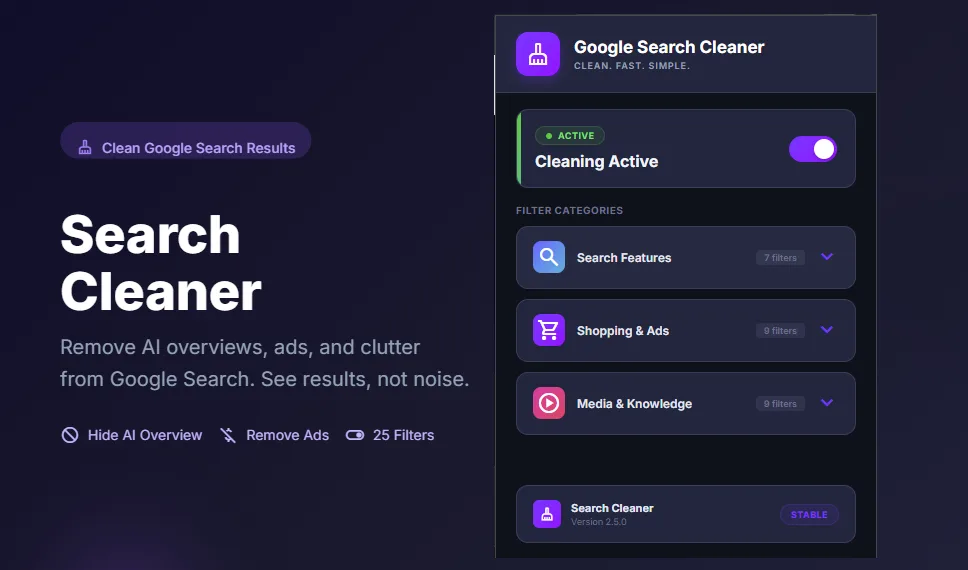
For controlling the browser itself by voice, see voice control for web browsing. On screen, Search Cleaner hides the Google sections you choose, such as AI Overviews, when you'd rather compare plain results yourself.