Best Chrome Extensions for QA Testers in 2026
PB
Patrick Bushe
July 23, 2024 · 5 min read
A good QA setup in Chrome is mostly DevTools, plus a few extensions for capturing bugs and checking accessibility. The most important habit is testing in a clean browser, so your own extensions don't change what you see.
DevTools features to know
- Device mode (
Ctrl + Shift + M): test screen sizes and touch. - Network throttling: simulate slow connections in the Network tab.
- Console: catch JavaScript errors as you test.
- Application tab: view and clear cookies, storage and service workers to reproduce first-visit bugs.
- Recorder: record a user flow, replay it, and export it as a test script.
- Lighthouse: quick checks for performance, accessibility and best practices.
Bug capture
- Bug reporting extensions such as Jam capture a screen recording together with console logs, network requests and browser details, so developers can reproduce the issue.
- Visual feedback tools like Marker.io and BugHerd let you annotate screenshots and send them straight into your issue tracker.
- DevTools can capture a full-page screenshot:
Ctrl + Shift + P→ Capture full size screenshot.
Accessibility
- axe DevTools and WAVE find common accessibility problems.
- The DevTools Rendering panel simulates vision deficiencies and reduced motion.
- Always test with the keyboard alone. See accessibility testing tools.
Content checks
- Word Counter counts the characters in selected text, useful for checking copy against field limits and SEO title lengths.
- Font Detector confirms the font, size, weight and color of text match the design.
Long-running visual checks
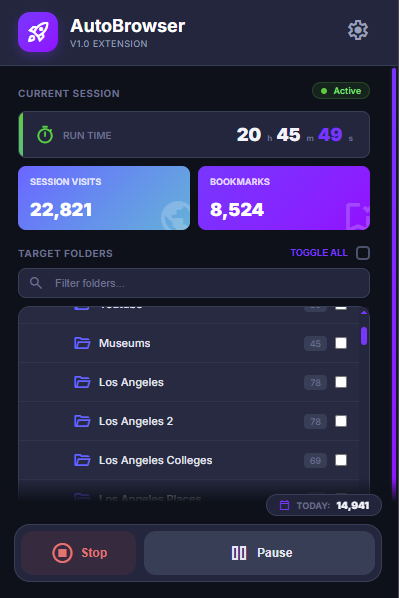
For soak testing or watching a set of pages over time, AutoBrowser plays the pages in a bookmark folder one after another in a single tab, on a timer, and loops. It's handy on a spare monitor for spotting layout breaks across many pages. It only opens pages; it doesn't click, type or check for errors, so use Recorder or a test framework for that.
Keep a clean test browser
- Use a separate Chrome profile with only testing tools.
- Turn off ad blockers and cookie banner tools when testing, or you'll miss bugs in consent flows and ads that real users see.
- Use Guest mode or Incognito for a true first-visit test.
- Test in other browsers too: Firefox and Safari render some things differently.
For automated tests, see no-code automation vs Selenium.