How Knowledge Graphs Power AI Answers
Patrick Bushe
June 19, 2024 · 5 min read
A knowledge graph is a database of things, such as people, places, companies, books and films, and the facts that connect them. "Paris is the capital of France" is two things and a relationship. Search engines and AI systems use knowledge graphs to answer questions directly, rather than just pointing to pages.
Google's Knowledge Graph
Google introduced its Knowledge Graph in 2012 with the phrase "things, not strings": understanding what a search is about, not just matching words. It powers the knowledge panels on the right of many results, with facts, photos and related searches.
Other knowledge graphs
- Wikidata: a free, open knowledge graph run by the Wikimedia Foundation since 2012, used by many apps and AI projects.
- Company graphs: Microsoft, Amazon, Apple and others run their own for search, shopping and voice assistants.
How they help AI answers
Large language models generate text from patterns learned in training, which is why they sometimes state wrong facts confidently. Knowledge graphs help in several ways:
- Grounding: checking or supplying facts from a structured source, which can reduce made-up details.
- Disambiguation: working out whether "Jaguar" means the animal, the car brand or a sports team.
- Connections: answering questions that need several linked facts. Microsoft Research's GraphRAG, published in 2024, builds a graph from documents to help AI answer broad questions about them.
Where the facts come from
Knowledge graphs draw on sources such as Wikipedia, Wikidata, official records, licensed data and websites' own structured data. Errors in those sources can carry into panels and AI answers. See how knowledge panels use content.
For website owners
- Structured data: schema.org markup, created in 2011 by the major search engines, describes your organization, products, people and articles in a form machines read easily.
- Consistent details: keep your name, address and descriptions the same across your site, profiles and directories.
- Link your profiles: the
sameAsproperty connects your site to your official profiles elsewhere. - Claim your panel: people and organizations with a Google knowledge panel can request to verify and suggest changes to it.
Choosing what you see
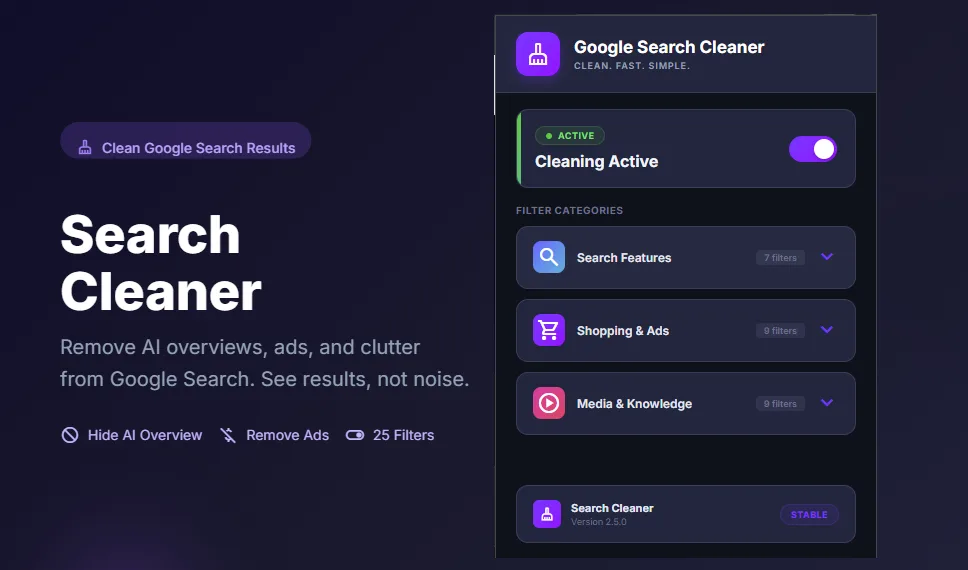
Knowledge panels and AI Overviews are convenient but take attention away from the results themselves. Search Cleaner can hide the knowledge panel and AI Overviews if you'd rather see links. See fact-checking AI answers.