Night Mode Extensions Ranked: Which Ones Actually Reduce Eye Strain
Patrick Bushe
July 18, 2024 · 5 min read
"Night mode" extensions come in three kinds, and they help in different ways. Picking the right one depends on what's bothering your eyes. Here's how they compare, ranked by how much they help typical night browsing.
1. Dark mode extensions: best for glare
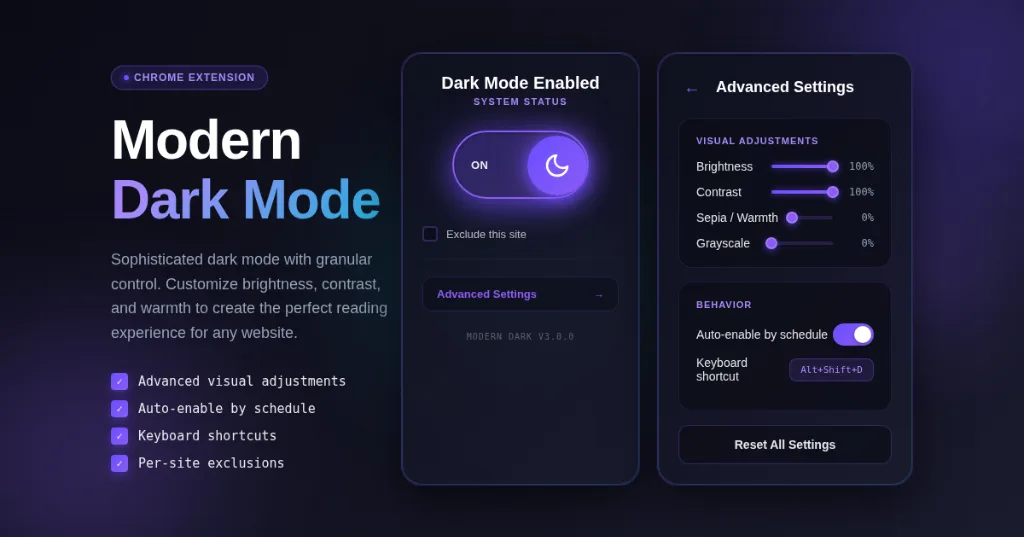
These turn bright white pages dark, which cuts the total light the screen puts out. In a dim room that's the biggest comfort gain. Look for per-site controls, image handling that doesn't turn photos into negatives, and scheduling. Dark Reader is the best-known option; Modern Dark Mode, which I built, focuses on clean filters, minimal permissions, and per-site control. Here's how the two compare.
2. Blue light filters: best for warmth
These add a warm amber tint to pages. They don't cut glare as much as dark mode, but many people find warm light more comfortable late at night. Eye doctors don't consider screen blue light harmful, and the sleep benefit is modest, so think of this as comfort, not protection. Blue Light Filter does this in Chrome with a schedule. Your operating system's Night Shift or Night light does it for everything on screen.
3. Dimmers: useful, with a catch
Dimming extensions lay a dark overlay over pages. They help when your screen can't go dim enough, but they also reduce contrast, which can make text harder to read. Lowering screen brightness itself is usually better.
What actually reduces eye strain
- Matching screen brightness to the room.
- Bigger text, so you're not leaning in.
- Regular breaks: the 20-20-20 rule.
- Blinking, and managing dry air.
Extensions help with comfort, but these habits do the most. For using two tools together, see dark mode and blue light filter settings.