Using Dark Mode and Blue Light Filter Together: Optimal Settings
PB
Patrick Bushe
October 2, 2025 · 5 min read
Dark mode and a blue light filter solve different problems, which is why they work well together. Dark mode cuts how much light the screen throws at you. A blue light filter warms the color of the light that's left.
What each one does
- Dark mode swaps big white areas for dark ones, so the screen emits far less light overall. In a dim room that means less glare and less squinting.
- A blue light filter shifts the screen toward warm, amber tones by cutting the blue end of the spectrum. Many people find warm light more comfortable in the evening.
Keep expectations realistic. Eye doctors don't consider screen blue light harmful to your eyes, and the effect on sleep is modest compared with simply putting the screen away. The main benefit of both is comfort.
Settings that work together
- Use dark mode after sunset, not all day. In a bright room, light text on a dark background can be harder to read, especially with astigmatism.
- Keep the filter moderate. A light warm tint is enough when dark mode is on. A heavy orange filter plus a dark background makes text dim and muddy.
- Soften the contrast. Dark gray backgrounds with off-white text are easier than pure black with pure white.
- Lower the screen brightness to match the room rather than relying on the filter to dim things.
- Schedule both. Having them switch on at the same time each evening means you never have to think about it.
Combinations to avoid
- A strong filter with low brightness and dark mode: text loses so much contrast that you lean in and strain more.
- Color-critical work, like photo editing or checking brand colors, with either one on. Turn both off for that.
Setting it up in Chrome
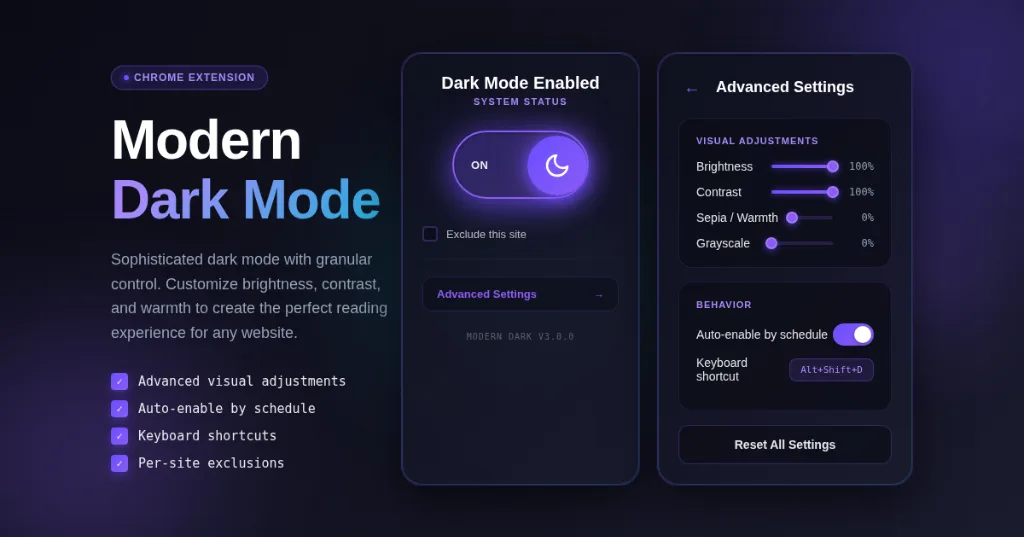
Your operating system's night mode covers the whole screen. For Chrome, Modern Dark Mode darkens sites that have no dark theme and Blue Light Filter adds the warm tint, both on a schedule. For more on the difference, see blue light filter vs night mode.