Night Shift vs Blue Light Filter Extension: Which Actually Reduces Eye Strain
Patrick Bushe
September 27, 2025 · 5 min read
Night Shift (Mac and iPhone) and Night Light (Windows) warm the colors of your whole screen. A blue light filter extension does the same thing inside Chrome only. Neither one is a cure for eye strain, but they do make screens easier on the eyes at night. Here's how to choose.
Night Shift and Night Light
- Mac: System Settings → Displays → Night Shift. Schedule it from sunset to sunrise or set your own times, and slide the color temperature warmer or cooler.
- Windows 11: Settings → System → Display → Night light. Set its strength and a schedule.
- Chromebook: Settings → Device → Displays → Night Light.
They cover everything on the screen: every app, every window and the browser, and they cost nothing. For most people they're the first thing to try.
What an extension adds
An extension only works inside the browser, which is a limit but also the point:
- It works where system settings don't, such as on a work computer where Night Light is locked, or a monitor setup where the system setting misbehaves.
- It can be tuned separately. Keep the rest of the screen neutral for photo or design work and warm only the pages you read.
- It can be switched on and off per session from the toolbar, without opening system settings.
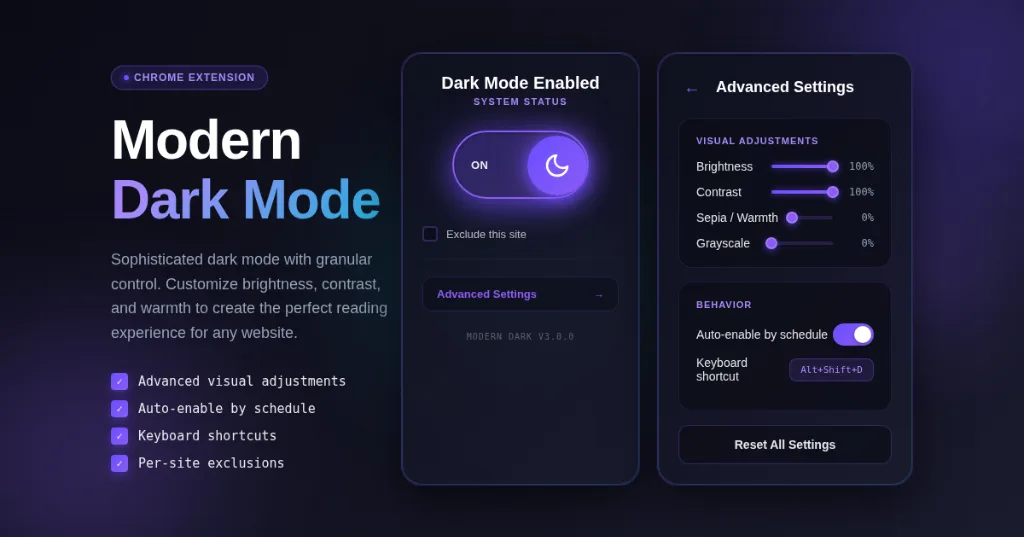
Blue Light Filter lays a warm amber tint over web pages, with sliders for intensity and warmth and a schedule so it turns on in the evening. It doesn't tint Chrome's own menus or other apps. For those, use Night Shift or Night Light.
Don't stack both at full strength, or pages turn deep orange. Use one, or keep both mild.
Does either one reduce eye strain?
Not directly. Eye strain mostly comes from long stretches of close focus, blinking less while you look at a screen, glare and brightness that doesn't match the room. Warmer colors can feel more comfortable in the evening, but they don't fix those causes. Blue light from screens hasn't been shown to damage the eyes. Whether it affects sleep is still debated, but dimming screens and cutting late screen time is reasonable advice either way.
What does help with eye strain
- Every 20 minutes, look at something about 20 feet away for 20 seconds.
- Set screen brightness close to the brightness of the room.
- Blink on purpose, and use eye drops if your eyes feel dry.
- Keep the screen at arm's length, slightly below eye level.
- Get your eyes checked. An outdated prescription is a common cause.
Which one to use
- Most people: Night Shift or Night Light on a schedule.
- You only need it in the browser, or can't change system settings: a blue light filter extension.
- You do color-sensitive work: keep the system neutral and use a browser tint only while reading.