Ideal Monitor Brightness for Working in a Dark Room
Patrick Bushe
September 26, 2025 · 5 min read
In a dark room, your screen should be much dimmer than in daylight, roughly as bright as a sheet of white paper would look in that room. A screen far brighter than its surroundings is tiring, and a pitch-black room around a bright screen is the worst of both.
The white-page test
- Open a page with a plain white background.
- Hold a sheet of white paper next to the screen, lit by the room's light.
- Lower the brightness until the white on the screen looks about as bright as the paper.
If the screen looks like a light source, it's too bright. If you have to squint at text, it's too dim. Most people end up much lower than they expect, often near the bottom of the brightness range at night.
Add a little light behind or around the screen
Working in a fully dark room makes your eyes keep adjusting between a bright screen and a dark background. A small lamp behind the monitor or a soft light elsewhere in the room (often called bias lighting) cuts that contrast and makes a dim screen more comfortable. Keep lights out of your line of sight and off the screen, so they don't cause glare.
Numbers, if you want them
Screen brightness is measured in nits (candelas per square meter). For reference, the sRGB standard that most web content is made for assumes a display of 80 nits, and photo editors often calibrate to somewhere around 80 to 120 nits for dim rooms. Many monitors go much brighter, so in a dark room you may be using only a small part of the range. Your operating system's brightness slider doesn't show nits, so the white-page test is the practical way to set it.
Other settings that help at night
- Turn contrast down slightly if very black text on very white pages feels harsh.
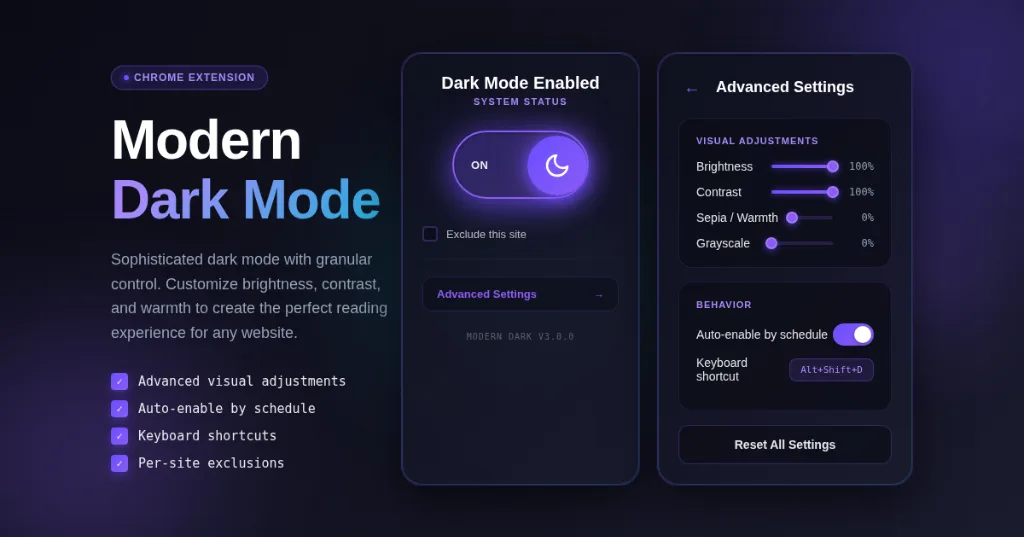
- Use dark mode on sites and apps that look good in it, so there's less bright white overall. Modern Dark Mode does this on any site in Chrome.
- Warm the colors in the evening with Night Light on Windows, Night Shift on Mac, or a browser tint such as Blue Light Filter.
- Watch out for flicker. Some screens flicker at low brightness. If dim settings give you headaches, a flicker-free monitor helps.
Adjust as the room changes
The right brightness changes with the room's light. Turn it up in daylight and back down in the evening. Auto-brightness on laptops does this for you if it has a light sensor, though many people still find it too bright at night and nudge it down. For more on screen comfort, see refresh rate and eye strain.