Best Display Technologies Ranked for Eye Comfort
Patrick Bushe
September 4, 2025 · 5 min read
For long reading, e-ink is the most comfortable screen there is. For everything else, a flicker-free LCD with a matte finish is usually the easiest on the eyes, with OLED a close match if it dims without flicker. The features of a particular screen matter more than the technology's name, so here's what to look for.
1. E-ink (e-paper)
E-ink screens, used in e-readers, reflect light like paper instead of shining it at you. They don't flicker, work well in bright light, and are the closest thing to reading a printed page. The trade-offs: slow refresh, little or no color, and no good for video. Many have a front light for the dark, which is gentle but still a light source.
2. LCD (IPS and VA)
Most monitors and laptops use LCD panels lit by a backlight. Good ones are very comfortable:
- Many monitors now dim without flicker (often sold as "flicker-free").
- Matte finishes are widely available and cut reflections from windows and lamps.
- IPS panels keep colors and contrast steady when you look from an angle; VA panels have deeper blacks.
Blacks are never fully black, since the backlight is always on, which matters little for daytime work.
3. OLED
Each OLED pixel makes its own light, so blacks are truly black and contrast is excellent, which suits dark mode and dark rooms. The caution is dimming: many OLED phones and some laptops dim by flickering the pixels (PWM) at low brightness, which bothers some people. Look for reviews that measure PWM, or "DC dimming" options. Glossy finishes are also common on OLED, so watch for reflections.
4. Mini-LED
Mini-LED is an LCD with thousands of tiny backlight zones, giving very bright, high-contrast images. That brightness is great for HDR video but can be more than you need for reading. Check flicker reviews, as dimming methods vary.
What matters more than the panel type
- Flicker-free dimming, if you're sensitive to it.
- A matte or anti-glare finish if your room has windows or bright lights.
- Sharp text: higher pixel density makes small text crisper and easier to read.
- The right size and distance, so you don't lean in or turn your head.
- Brightness that matches the room. See ideal monitor brightness in a dark room.
Software that helps on any screen
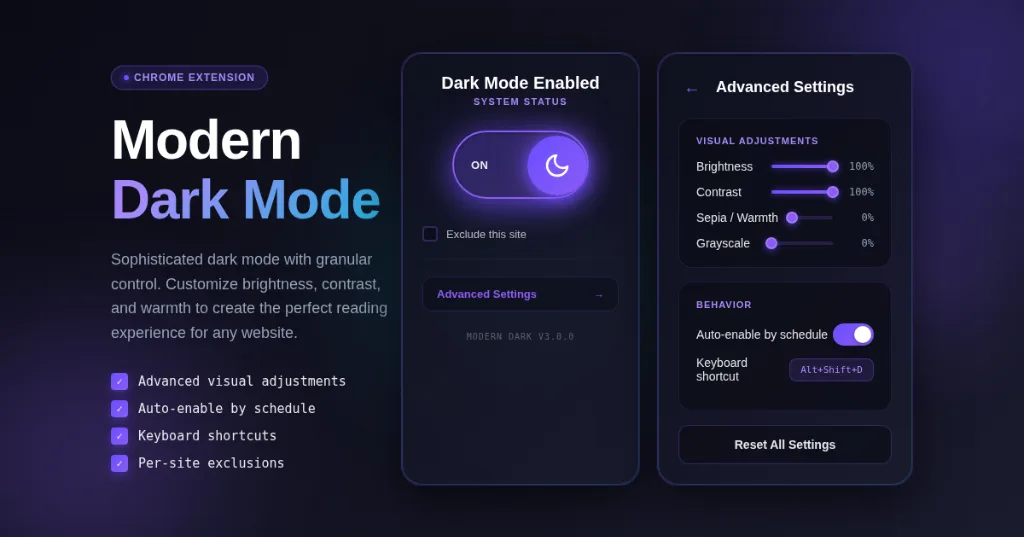
Whatever you have, dark mode at night, warmer colors in the evening (Night Light, Night Shift, or Blue Light Filter inside Chrome) and regular breaks make a difference. Warmer colors and filters are about comfort; they don't fix eye strain caused by long focus without breaks.