How Screen Glare Affects Reading Comprehension and How to Eliminate It
Patrick Bushe
August 31, 2025 · 5 min read
Glare is light that reaches your eyes from the wrong place: reflections of windows and lamps on the screen, or a screen much brighter than the room. It lowers contrast, so text is harder to make out, and you end up squinting, leaning in and tiring faster.
Two kinds of glare
- Reflected glare: windows, lamps and ceiling lights reflecting off the screen. Glossy screens are worst.
- Screen glare: a bright white screen in a dim room, which feels harsh and makes your eyes work to adjust.
How it affects reading
- Reflections wash out text, so your eyes work harder to separate letters from background.
- You change posture to avoid reflections, which brings neck and shoulder strain.
- Harsh brightness makes long reading sessions uncomfortable sooner, so you stop or skim.
Fix reflected glare
- Move the screen so windows are to the side, not behind you or behind the screen.
- Control the light: close blinds when sun hits the screen, and use indirect lamps instead of bright overhead lights.
- Tilt the screen slightly until reflections move out of your line of sight.
- Add a matte anti-glare filter to a glossy screen, or choose a matte screen next time.
Fix screen glare
- Match brightness to the room: the screen should look about as bright as a sheet of paper next to it. See ideal brightness for a dark room.
- Use auto-brightness on laptops, or adjust as daylight changes. See adaptive vs fixed brightness.
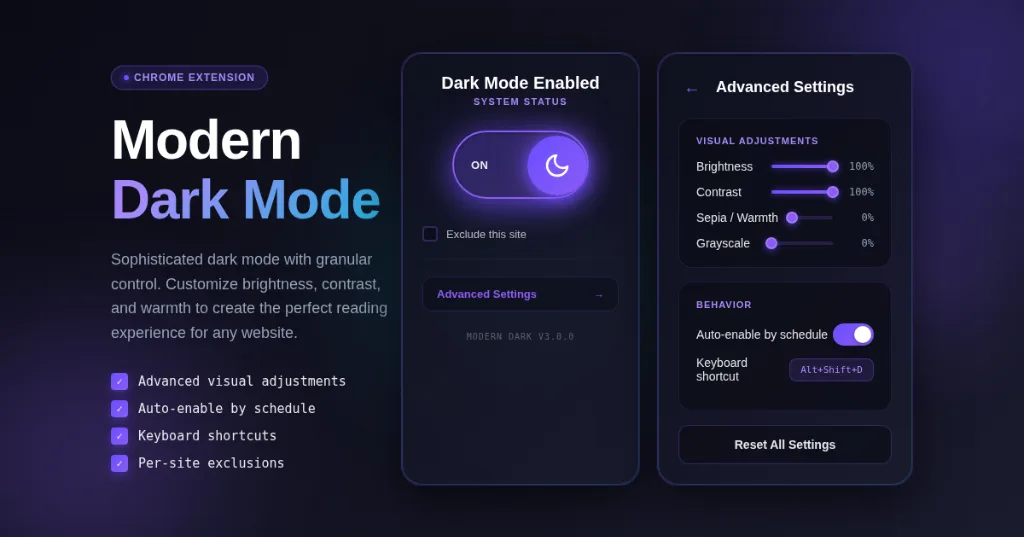
- Darken bright pages in the evening. Modern Dark Mode turns white pages dark gray and has brightness and contrast sliders.
- Warm the colors at night. Blue Light Filter adds a warm tint to web pages on a schedule.
A dark mode catch
Dark backgrounds make reflections more visible, because there's less light from the screen to drown them out. If you use dark mode on a glossy screen, controlling room lighting matters even more. In a bright room, light mode with good positioning may be clearer.
Give your eyes breaks
Even without glare, long reading tires your eyes. Look away into the distance regularly and remember to blink. See the 20-20-20 rule and why blinking drops on screens.
If eye strain continues after fixing glare, see an optometrist. Glasses for computer distance can help a lot.