Screen Time Limits for Adults: What the Research Actually Recommends
PB
Patrick Bushe
September 14, 2025 · 5 min read
If you're looking for an official number of hours, there isn't one. Health bodies publish screen time guidance for young children, but not for adults, largely because adults' screen time is mostly work and the research doesn't support a single safe limit. What it does point to is how you use screens.
What the evidence actually covers
- Eyes: long, unbroken screen sessions cause digital eye strain: dry eyes, blurry vision, and headaches. It's uncomfortable but temporary, and breaks help most.
- Sleep: screens late at night are linked with later bedtimes and worse sleep. Much of that is the content keeping you awake, not just the light.
- Sitting: long stretches of sitting are linked with health risks on their own. Screen time is often sitting time, so movement breaks matter.
- Wellbeing: studies of social media and mood are mixed. Passive scrolling tends to look worse than active use, like messaging friends.
Limits that make a difference
- Break it up. Look away every 20 minutes and get up at least once an hour. That matters more than your daily total.
- Protect the last hour before bed. A screen-free wind-down is the most reliable sleep improvement.
- Cap the leisure screens you choose. Work screen time is hard to cut, so put limits on scrolling and streaming instead. Phone screen time settings can enforce that.
- Swap passive for active. Replace some scrolling with things you'd choose on purpose.
Make the screen time you keep easier
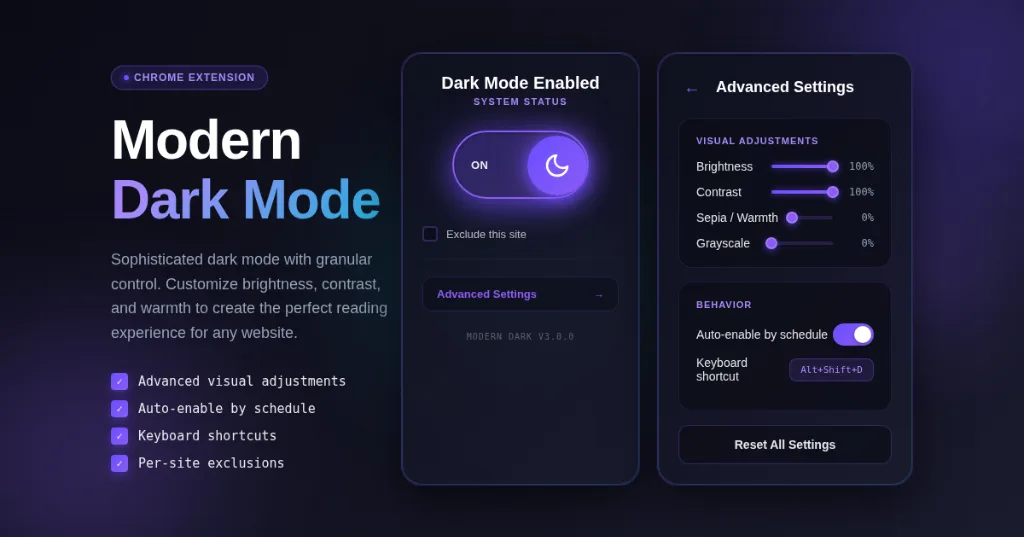
Good posture, the right monitor distance, and comfortable brightness cut eye strain for the same number of hours. In the evening, dark mode and a warm filter help comfort; here's how to combine them. To see where your time goes, screen time extensions for Chrome can track and limit specific sites.