How Ambient Lighting Affects Screen Viewing and Eye Comfort
PB
Patrick Bushe
September 13, 2025 · 5 min read
Your eyes adjust to the overall brightness around you. When the screen is much brighter or darker than the room, they keep adjusting as you look between the two, which is tiring. Good room lighting makes screen work noticeably more comfortable.
The main rule: avoid big contrasts
- Bright screen, dark room: the screen feels harsh and the edges of your vision are dark. Common late at night.
- Dim screen, bright room: text looks washed out, so you squint and lean in.
- Goal: the screen should look about as bright as a sheet of white paper on your desk.
Where light should come from
- Windows to the side of the screen, not behind it (too bright behind) or behind you (reflections).
- Soft, indirect overhead light rather than a bare bulb or strong spotlight above the screen.
- A desk lamp aimed at your papers or keyboard, not at the screen or your eyes.
- Blinds or curtains for times when the sun hits the screen.
Bias lighting
A soft light behind the monitor, such as an LED strip on the back, brightens the wall behind the screen. That reduces the contrast between a bright screen and a dark room, which many people find more comfortable in the evening. Choose a neutral or warm white and keep it dim.
Light color through the day
- Daytime: neutral or cool white light helps you stay alert.
- Evening: warmer, dimmer light is more relaxing.
- Match the screen: use your system's night light, and Blue Light Filter to warm web pages on a schedule.
Screen settings to match
- Use auto-brightness on laptops, or lower brightness as the room gets darker. See ideal brightness for a dark room.
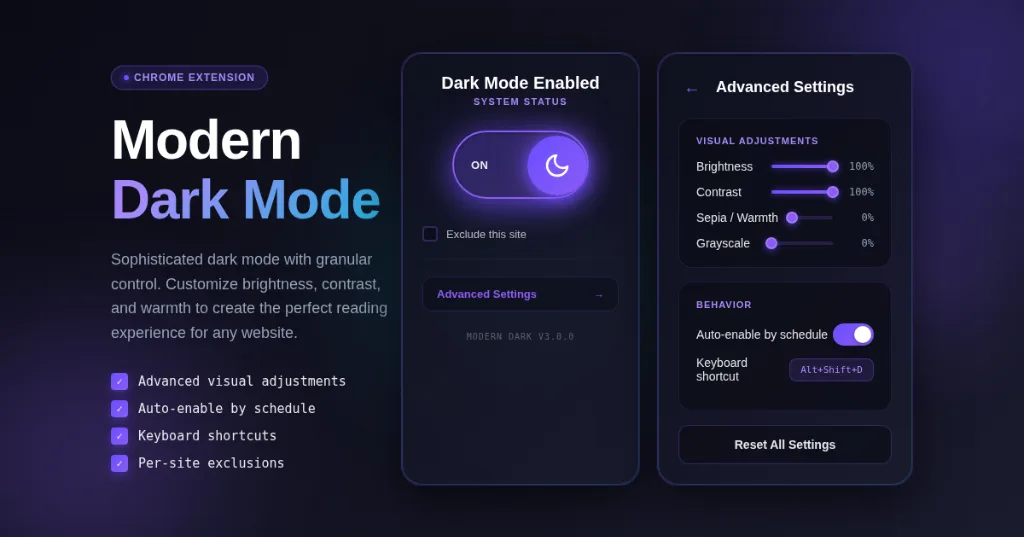
- In dim rooms, darker pages are easier on the eyes. Modern Dark Mode turns bright web pages dark gray.
- In bright rooms, light mode with higher brightness is often clearer.
Watch out for glare
Lights and windows reflecting on the screen lower contrast and cause squinting. Tilt or move the screen until reflections disappear. See fixing screen glare.
Quick setup check
- Sit at your desk at the time you usually work.
- Hold a sheet of white paper beside the screen. Adjust brightness until they look similar.
- Look for reflections and bright spots in your peripheral vision, and move lights or the screen.
- Repeat in the evening if you work late.